
The Lost Science of Love
Eva Selhub, MD
Psychology & Science
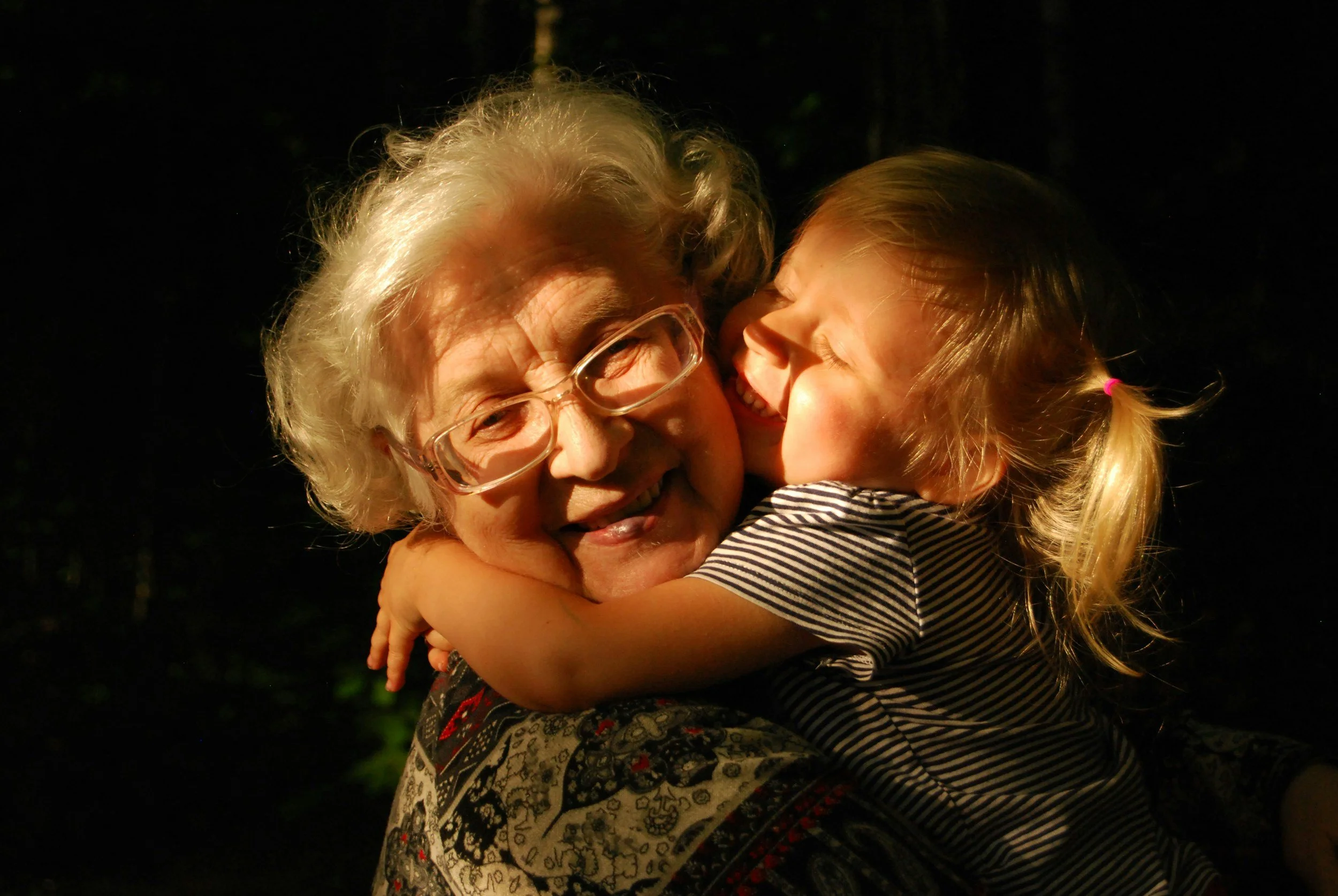
I am a physician, executive coach, and resilience expert who consults with organizations on the integration of medicine, neuroscience, stress physiology, leadership, spirituality, and human performance. Across thirty years of clinical practice, research, and working with individuals and companies across industries, I continue to come back to the same conclusion many wisdom traditions have pointed toward for thousands of years: human beings function profoundly differently depending on whether physiology is organized primarily around chronic stress and threat or around regulation, connection, balance, meaning, and trust. Love, in its broadest sense, appears to be one of the most powerful pathways into that state.
I do not refer to “love” as sentiment or romance, but rather as a physiological state that profoundly influences perception, cognition, resilience, behavior, healing, and human connection. The degree to which love has become culturally narrowed toward romance and private emotion while increasingly detached from broader discussions of human functioning, physiology, health, leadership, and social life is, I believe, one of the more consequential shifts of the modern era, particularly within a culture increasingly shaped by loneliness, polarization, chronic stress, burnout, and social disconnection.
How Love Got Pigeonholed
When people see the title of my first book, The Love Response, they often assume it is about romance, relationships, feelings, or sentiment rather than physiology, stress regulation, resilience, physical healing, or human performance. This is not surprising as love has become culturally associated primarily with private emotional experience rather than with broader questions of human functioning and social life.
Love as a healing force, however, is not a new idea.
Empedocles, writing in the fifth century BCE, proposed that two forces governed all of existence: philia, or love, and strife. This was not mere poetic abstraction; on the contrary: Empedocles believed that love and strife formed the literal physics of attraction and separation, respectively, that held matter together and made connection and creation possible. Aristotle carried this understanding into human and civic life, arguing in the Nicomachean Ethics that philia is most necessary in life itself, and that without it neither justice nor genuine community was possible.
Ancient medical traditions often approached health through similarly integrated frameworks. In Ayurveda, vitality, emotional life, resilience, and connection were deeply intertwined. In Taoist philosophy and medicine, ci — the first of the Three Treasures named by Laozi in the Tao Te Ching, best translated as “compassion, tenderness, and love” — was considered the foundational virtue through which fear is transformed into courage. “Through love,” Laozi wrote, “one has no fear.” By this, he did not mean that fear was eliminated per se, but that love itself was an avenue to experience one’s fear in a more generative way.
This understanding was not confined to Eastern traditions. This basic fear-love ethos is echoed in the Christian tradition: in 1 John 4:18, Christ himself notes that “Perfect love drives out fear.” Centuries later, Maimonides argued that physicians must treat both body and soul because the two could not meaningfully be separated in human life.
Of course, earlier traditions did not understand love in modern neurobiological terms. But many recognized that people are profoundly relational organisms, and that emotional and social life has measurable consequences for health and resilience.
Leonardo da Vinci was among the last great figures in Western thought to pursue art, science, medicine, and philosophy as a single inquiry. In The Notebooks of Leonardo da Vinci, he cautioned that "Abbreviators do harm to knowledge and to love, seeing that the love of any thing is the offspring of this knowledge, the love being the more fervent in proportion as the knowledge is more certain. And this certainty is born of a complete knowledge of all the parts, which, when combined, compose the totality of the thing which ought to be loved." Rather than treating knowledge as a collection of isolated disciplines, Leonardo understood it as something that emerged from seeing relationships and wholes.
Paracelsus extended this understanding into medicine and alchemy. The central operation of alchemy — the coniunctio, the union of opposites into a unified whole — was not merely a chemical metaphor but a philosophy of healing: that what is fragmented must be brought into wholeness, and that separation is the condition of disease and reunion the condition of restoration.
Carl Jung, in Alchemical Studies, interpreted Paracelsus's concept of the coniunctio as more than an alchemical operation. It represented the psychological union of opposites through the integrating principle of Eros—a force of relationship that makes wholeness possible. Paracelsus likewise regarded knowledge and love as inseparable. As he wrote in Selected Writings, "He who knows nothing loves nothing. He who can do nothing understands nothing. He who understands nothing is worthless. But he who understands also loves, notices, sees... The more knowledge is inherent in a thing, the greater the love…Everything lies in knowledge. From it comes every fruit."
This integrated view did not disappear all at once. Beginning in the seventeenth century, Western science increasingly adopted a mechanistic framework that transformed medicine and human understanding. René Descartes' mind-body dualism, combined with the rise of Newtonian physics, helped establish a model in which complex systems could be understood by reducing them into measurable parts governed by predictable laws. That shift produced extraordinary advances and laid the foundation for modern medicine, scientific rigor, and technological progress. At the same time, it increasingly separated physiology from subjective experience, emotion from cognition, mind from body, and people from the relational and environmental contexts in which they exist. Industrialization reinforced this fragmentation culturally and economically as human value became increasingly tied to productivity, efficiency, performance, and output.
Medicine evolved within this same intellectual and economic climate. As scientific specialization accelerated, the study of health increasingly became the study of parts: organs, pathways, neurotransmitters, symptoms, and disease mechanisms examined in isolation rather than within the context of the whole person and the ecosystems in which people truly live.
Even Freud, who drew directly on Empedocles and named Eros and Thanatos as the two fundamental drives of human life, had already narrowed love into pathology and the unconscious — a clinical problem to be analyzed rather than a biological state to be cultivated. It may have been the last gasp before medicine set the word aside entirely.
Over the course of my own career, I watched medicine increasingly mirror the broader cultural movement toward measurement, efficiency, standardization, optimization, and risk management. Clinical care became progressively more protocol-driven, data-driven, and liability-conscious.
To be sure, the rigorous study of love hasn’t ever left the academy, but it, like all other inquiries, has become highly specialized. Scholars have long studied individual components of love — attachment, social connection, oxytocin, meaning, belonging — without naming it as such. Helen Fisher's neuroimaging research demonstrated that romantic love activates dopamine-rich reward regions of the brain with the same intensity as primary biological drives. Holt-Lunstad's meta-analysis across 148 studies and over 300,000 participants found that adequate social relationships increased the likelihood of survival by 50 percent, making social connection as powerful a predictor of mortality as smoking or obesity. Research showed that when separated, isolated cardiac cells beat erratically and fall out of rhythm, and when brought back into proximity with one another, they spontaneously synchronize — suggesting a broader principle found throughout biology: living systems often function differently in connection than they do in isolation. The Roseto study documented a close-knit Pennsylvania community whose rates of heart disease were half the national average — and showed that as social cohesion declined and individualism replaced community, those rates rose to match the rest of the country. Psychoneuroimmunology established that emotional states directly influence immune function, while attachment research documented what happens to the developing nervous system when secure connection is present or absent.
These are extraordinary modern findings, but in our era of specialization, the point is this: over time, love moved from a unifying theory of life and wellbeing to a word pigeonholed across siloed disciplines. The historical shift was one of language and perspective, not necessarily of biology. Examining the physiology offers another lens through which to consider the role love may play in human functioning.
What the Body Already Knows
At its most basic level, every living organism has a stress response because survival depends on it. The nervous system is constantly working to maintain balance while adapting to an ever-changing internal and external environment. Bruce McEwen's work on allostasis and allostatic load helped clarify that the body does not maintain balance through static equilibrium, but through continuous physiological adaptation to demand, uncertainty, and change.
The stress response is a cascade of physiological changes, driven primarily by cortisol and catecholamines, that occurs when the brain perceives the resources available to meet those demands as insufficient. As the stress response activates, attention narrows. Digestion, reproduction, and long-term repair are deprioritized. Higher-order cognition and emotional flexibility diminish. Heart rate, muscle tension, inflammation, and blood pressure increase as the body shifts toward survival physiology.
In the short term, the stress response is adaptive and necessary for survival. It is meant to activate, meet the demand, and then shut off once the stressor has resolved. Problems arise when the stress response becomes chronically activated. Over time, an increasing allostatic load develops, contributing to physical and psychological pathology, burnout, and a loss of flexibility within the system.
Coping determines what happens next. Adaptive coping resolves the stressor and allows the stress response to settle. For example, if we are hungry and we eat, the stressor is resolved and the stress response naturally extinguishes. Maladaptive coping, by contrast, temporarily relieves the discomfort of the stress response without resolving the underlying stressor. If we are anxious and we eat, the food may briefly soothe the stress response, but it does not address the source of the anxiety. The same principle applies to alcohol, compulsive work, avoidance, or countless other behaviors that provide temporary relief without actually resolving the stress itself. As a result, the stress remains intact, making it more likely that the stress response will reactivate and the behavior will be repeated. Over time, repeated activation contributes to dysregulation across multiple physiological systems and an increasing allostatic load—the body paying an ever-growing biological cost for a threat it was never allowed to fully resolve.
Most coping patterns are formed long before we have the cognitive maturity or self-awareness to understand what is happening. We are not consciously choosing them because we believe they are healthy—eating when feeling overwhelmed or anxious is a classic example. The pattern becomes reinforced because, at some level, it lowers distress and helps the system feel more manageable.
If food temporarily soothes the system, we are more likely to reach for it again. If achievement creates relief or a brief sense of control, we may become more driven. If withdrawal reduces overwhelm, we may pull away more easily. Over time, the organism learns to repeat whatever lowers activation most effectively, even when the underlying stress remains unresolved.
Stress also compounds on itself. If someone develops chronic back pain, the pain becomes a stressor, loss of function becomes a stressor, and fear that it may not resolve becomes another. Gradually, the experience may also activate older fears or beliefs tied to helplessness, shame, rejection, or not being enough — and social isolation, strain on relationships, and the weight of accumulated meaning all become part of what the organism is now carrying.
In this way, chronic stress becomes increasingly self-reinforcing. Physiology, memory, perception, emotion, and behavior continuously interact with one another. What begins as an individual physiological state rarely stays individual. It shapes how people relate, how they lead, how they parent, and how entire cultures begin organizing themselves around either threat or connection.
The stress response exists not simply for adaptation but ultimately for survival—and because survival depends on detecting and responding to potential threats, fear becomes one of its primary organizing forces. Yet fear alone cannot sustain a life. Love, joy, connection, and pleasure are equally fundamental driving forces, pulling us toward growth, bonding, exploration, healing, and ultimately flourishing. In the 1970s, Dr. Herbert Benson, founder of the Mind/Body Medical Institute at Harvard Medical School and later the Benson-Henry Institute for Mind Body Medicine at Massachusetts General Hospital, described the physiological counter-state to stress, which he termed “the relaxation response.” His work demonstrated that the body possesses an innate capacity to shift out of chronic stress physiology and return toward a more regulated state. That discovery helped transform our understanding of stress physiology, but it also raised another question for me: was relaxation the only physiological pathway back, or were there other states capable of producing similar or even broader effects?
In my early years working as the Medical Director at the Mind Body Medical Institute, I could not escape the sense that there had to be something more — not simply a state that restored calm, but a force powerful enough to create the desire to move through hardship, to connect, to grow, to keep going. Something that made the challenges of being alive not just bearable but worth enduring.
The answer — trite as it may seem, but forgotten for a millennium — is love. Love feels good for a reason. Experiences associated with awe, beauty, trust, compassion, attachment, connection, meaning, and unconditional love often create physiology very different from states of fear, shame, threat, overwhelm, or chronic stress activation. For example, the body softens rather than contracts, breathing deepens, muscles relax, and digestive and reproductive function begin returning. Perception widens as it becomes less narrowly organized around danger, urgency, and survival, allowing possibility, creativity, flexibility, and broader thinking to return.
The literature on the neurobiology of love pointed toward similar patterns involving oxytocin, dopamine, endogenous opioids, autonomic regulation, attachment, and stress modulation. Oxytocin appeared to play important roles in bonding, trust, social recognition, pain tolerance, wound healing, and stress buffering, though it is likely only one part of a far more complex physiological system supporting attachment, caregiving, cooperation, and connection. Indeed, human beings likely would not sustain caregiving, pair bonding, child-rearing, or community itself without biological systems that reinforce connection despite pain, vulnerability, uncertainty, and stress.
None of this is a new understanding. Every major healing tradition and philosophical framework that preceded modern medicine arrived at the same conclusion through a different door. And what has become clear across modern science is that biology has long prioritized bonding, attachment, and social cohesion over objectivity, which is precisely what has allowed human beings to sustain community, caregiving, and connection even when it is difficult, costly, or imperfect.
How I Came to See Love as Physiology
My own experience eventually led me to see love not simply as an emotion, but as a physiological state.
While serving as Medical Director of Dr. Herbert Benson’s Mind/Body Medical Institute, and teaching the clinical application of stress physiology and mind-body medicine at Harvard Medical School, I spent years reviewing the emerging research while applying many of these principles in patient care. Meditation and contemplative practices also became part of my own life.
When I meditated, I could feel my body shifting out of chronic vigilance and fear into states that felt calmer, clearer, and more open. I observed similar patterns clinically in my primary care practice. When mind-body approaches were applied, people often improved physically in ways that extended beyond what I would have expected from symptom management alone. Many became happier, more resilient, and functioned better in their relationships and lives overall.
Then my niece Maia was born.
The moment I held her, time seemed to stop. It was not simply the emotional intensity of the experience, but the physiological familiarity of it. I recognized that I had experienced similar physiological shifts through meditation. Though nothing about my external circumstances had changed, the lens through which I perceived reality changed almost instantly. I felt more open, more hopeful, and less trapped inside fear and constriction. I went from believing nothing was possible to believing anything was possible in the space of a breath. It was a remarkable experience — one that felt both metaphysical and physiological.
That contrast — nothing possible to anything possible — became the question that led me to Tobias Esch and George Stefano’s work on the neurobiology of love, which pointed to striking physiological similarities between the state love produces and the relaxation response. This eventually led me deeper into the placebo response, the oxytocin literature, the dopaminergic reward system, and the broader architecture of what happens in the body when safety, regulation, connection, belonging, and love are present rather than absent.
What emerged for me was not a new discovery, but rather the recognition of a physiological state characterized by measurable shifts in stress chemistry, autonomic regulation, perception, emotional flexibility, and the body's capacity to restore balance, adapt, heal, and respond more flexibly to life. I later came to call it The Love Response®.
Restoring Scientific Legitimacy
Love has long been treated as the soft side of human experience — private, emotional, and largely irrelevant to the serious business of medicine, leadership, and institutional life.
But what if that characterization is simply wrong?
The evidence reviewed here suggests that love — as a biological state — is not soft at all. It is the force that transforms fear into courage, that sustains caregiving through exhaustion, that allows human beings to remain connected and functional under conditions that would otherwise produce only contraction and defense. It is associated with greater resilience, wound healing, cognitive flexibility, trust, and adaptive capacity — precisely the qualities that medicine, organizations, and institutions claim to want and struggle to produce.
Consider the many adverse consequences of de-prioritizing love across medicine (and culture). Research on stress and cognitive flexibility confirms that under perceived threat, the brain shifts toward faster, more reactive processing at the direct expense of the higher-order thinking that complex social life requires. Research on contingent self-worth shows that when identity is built on external outcomes, anxiety increases, relationships become less stable, and resilience diminishes — regardless of how much is achieved. Research on social pain and threat response demonstrates that experiences of rejection, exclusion, or devaluation activate many of the same neural circuits involved in physical pain. These findings may help explain patterns increasingly visible across organizations and public life — reactive leadership, transactional relationships, polarization, and the erosion of trust — though the connection between individual physiology and collective cultural behavior remains an area of ongoing inquiry.
Trust becomes especially important within this framework — and not only as a social or moral construct. As the oxytocin research suggests, trust has a measurable physiological signature. People think, communicate, collaborate, and lead differently when the nervous system perceives safety, stability, and relational reliability than when it is organized around chronic threat and vigilance. Amy Edmondson's research on psychological safety demonstrated that teams whose members feel safe enough to take interpersonal risks think more creatively, learn more effectively, and perform at higher levels.
The cultural shift worth considering is this: what if institutions began measuring not just output and efficiency but the quality of connection, trust, and care within their systems — and designed accordingly? What if medicine restored love and human connection as legitimate clinical variables? What if leadership development included the physiology of safety and belonging alongside strategy and performance?
Returning Love to the Conversation
The U.S. Surgeon General Advisory on Social Connection recently identified loneliness and social disconnection as a major public health crisis. But loneliness itself may only be one visible symptom of a much broader physiological and cultural problem.
What matters is not the sentimentalization of love, but rather the restoration of conditions that allow people to move out of a body chronically organized around fear, vigilance, and survival, and back toward greater regulation, flexibility, trust, resilience, and connection.
The deeper question may not be whether love belongs in serious conversations about medicine, leadership, science, and human performance, but whether we can continue building models of human functioning that overlook how profoundly physiology shapes the way people think, relate, lead, heal, and live.
If chronic stress narrows perception, reinforces defensiveness, and shapes behavior at both individual and collective levels, then connection, trust, belonging, meaning, and love deserve more serious attention than modern culture often gives them. These experiences are not separate from biology. They influence physiology, and physiology influences how people interpret one another, tolerate uncertainty, communicate under pressure, lead through challenge, and sustain the broader social bonds that make cooperation and collective life possible.
What Empedocles called philia — the force through which matter coheres — Laozi named ci, the compassion through which fear gives way to courage, and Maimonides insisted physicians could never safely sever the soul from the body. What Paracelsus called the highest medicine, da Vinci understood as inseparable from knowledge itself. To say it again, these were early articulations of a physiological truth that science is now confirming in measurable terms: that regulation, connection, belonging, and love are not incidental to human functioning. They shape how people think, heal, lead, and sustain one another through difficulty. The wisdom traditions did not have our modern vocabulary for the autonomic nervous system or the oxytocin receptor, but they were pointing toward the same underlying architecture. Returning love to serious conversations about health, resilience, and human performance is, in that sense, less a new proposal than a recovery — of an understanding that earlier traditions never abandoned and that the science now gives us new language to defend.
Dr. Eva Selhub, MD is Chief of Medical Affairs at ForHumanity, a former Harvard Medical School instructor, leadership advisor, healthcare innovator, resilience expert, and bestselling author of six books. For more than 30 years, her work has integrated medicine, neuroscience, and the science of love, coherence, and resilience to advance health, leadership, organizational performance, and human flourishing.
July 2026