
February is a hard month in schools. Snow days threaten to stretch the year; in warmer climates, the daily grind is uninterrupted. Spring still feels theoretical. Teachers are tired. Students are restless. Even the disciplined feel their stamina wavering.
February carries a particular weight for me. During my years as a school leader, February became a season I associated with the loss of young lives — more than one, more than once.
There are stories I am still not ready to tell. This year, I want to share one I am.
I’ll call her Sarah. I was teaching English when she was a tenth grader, a capable student who slid by meeting minimum requirements and was largely disengaged from academics. What she was engaged in, fiercely, was people.
Her teachers called her "the Mayor." She knew every student in the school by name — knew their stories, their worries, their triumphs — and she managed to know most of the faculty and staff in the same way. To the chagrin of the faculty, she would miss half of geometry class to sit with a friend in crisis.
"Where is Sarah now?" a teacher would ask.
She would be found visiting the middle school or walking a hallway with a student in distress. She could never quite bring herself to hurry past a person in need. She could charm her way out of some detentions, but she also served plenty of them without complaint. Her grades were consistently lower than her potential. She knew it. So did we. To her, other things mattered more.
In the classroom, when she was present, Sarah lit up when she could connect our reading to a storyline in one of the television dramas she was following. She watched them faithfully, often sacrificing sleep to keep up with new episodes, and offered expert commentary to anyone who needed it.
When I announced a literary and theatre tour of London, she signed up, though she confided her fears: too many cultural sites, not enough shopping. To qualify, students needed to maintain a minimum GPA, raise funds, and deliver a presentation. Sarah barely met the requirements. I had my doubts. I wondered whether she would spend every free hour slipping away, waiting for the next episode to drop.
Before we boarded the plane, she proved me wrong. She attended every pre-trip seminar, raised the requisite funds, and delivered a presentation on the Tower of London that surprised everyone in the room, including her.
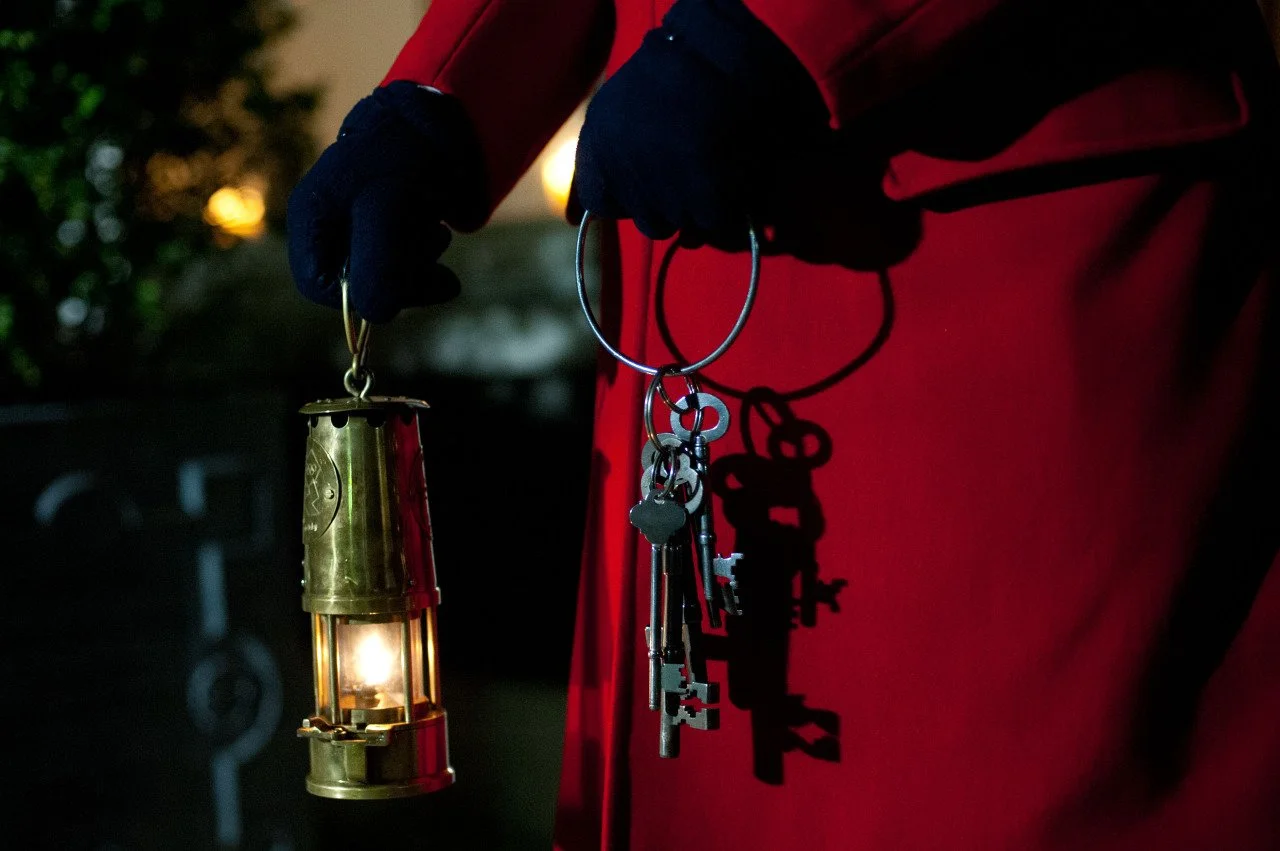
Halfway through the trip, on a raw evening thick with fog, our group gathered just inside Traitor's Gate for the Ceremony of the Keys — a ritual the Tower of London's guards have performed every night for over seven hundred years. The fog pressed close. The stones were slick and dark. Then the guards marched into sight, and a bugle blast split the silence so sharply that several students gasped. The formal exchange of keys, the cry of "All's well," the measured march back through the arch — and then they were gone, swallowed by the darkness.
On the Tube ride back, Sarah found me. "Ms. Bohlin," she said, "that was awesome. I've been thinking these past few days. When I get home, I'm going to stop watching TV."
I nodded politely. I expected it to fade.
It didn't.
Back at school, Sarah founded the school's first literary magazine — not as a platform for her own writing, but as a spotlight for the creative voices she knew in her peers. She threw herself into volunteer work with the elderly. She became business editor of the yearbook. On a later trip to Florence, she persuaded a small restaurant owner to buy an advertisement for our Massachusetts yearbook — an improbable sale that left the adults shaking their heads and smiling.
Something had shifted, and it held.
Nothing about her personality diminished. She was still magnetic, still a consummate operator. What shifted was her desire–and with it, the direction of all that energy she had always possessed in abundance.
The rules hadn't changed. No punishment loomed. Her mother hadn't forced her to turn off the television. What changed was that she encountered something compelling enough to make her see, with a clarity only lived experience produces, that she wanted more of one thing and less of another. She let something go in order to reach for something better.
What happened in that fog-filled courtyard?
Socrates offers a helpful frame. Education, he argued, is not about putting sight into blind eyes. The power to see — to learn, to grow, to aspire — is already there. Our work is to redirect it.
This is what I mean by the schooling of desire.
It is not about eliminating what captivates students: the dramas, the endless scroll, the daily noise, through discipline or prohibition. It is about offering something powerful enough to recalibrate their sense of what is worth wanting.
Young people do not lack desire. They overflow with it. The question is not whether they will want. It is what will capture their wanting. The most powerful educational moments are rarely arguments. They are encounters intense enough to redirect what a person loves.
Sarah went on, in adulthood, to become a fuller version of who she had always been, only more focused and more purposeful. She rediscovered her Orthodox faith and poured herself into revitalizing youth programs internationally. She founded a primary school, tirelessly sharing its vision, raising funds, and recruiting families. Then came the joyful courtship and wedding. She and her husband welcomed a baby son she adored. She was the first to pick you up from the airport, the first to open her home for a gathering and make everyone feel like the guest of honor. I recruited her onto the school board; she later recruited me to consult for her company.
At thirty-two, she died.
More than a thousand people came to her funeral. Letters arrived from around the world.
Friends spoke of the way she accompanied them in dark seasons, of the messages that arrived at just the right moment, of the joy of her presence. The fifteen-year-old who slipped out of class to sit with a friend in need had become a woman who built communities wherever she stood.
When February comes again with its fatigue, its thinning patience, and its particular weight, I will remember the bugle in the fog, and a girl who decided, in the dark, that she wanted more.
That is what education, at its best, makes possible.
Karen E. Bohlin directs the Practical Wisdom Project and its leadership program, Wisdom at Work. She teaches and writes on the schooling of desire, practical wisdom and education for flourishing.