
Faculty Stipend for Educational Innovation
Academic Year 2026 - 2027
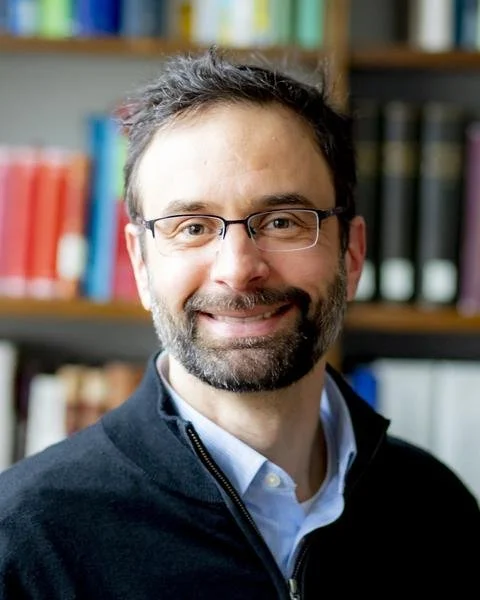
Professor Jeffrey McDonough
Philosophy Department Chair, Young J. Lee and Young Ju Rhee Professor of Philosophy, Director of the Harvard History of Philosophy Workshop
Jeffrey McDonough joined Harvard’s Philosophy department in 2005 after receiving his Ph.D. from the University of California, Irvine. His primary areas of research lie in early modern philosophy, the philosophy of science and especially their intersection in the early modern era. He also has strong interests in medieval philosophy as well as contemporary metaphysics and epistemology.

Professor Leah Whittington
Professor of english
Leah Whittington is Professor of English at Harvard University. She joined the faculty at Harvard in fall 2012, following a year as a Mellon Postdoctoral Fellow at the Columbia Society of Fellows in the Humanities. Her research centers on early modern English Literature, the survival and reception of classical antiquity, England's interactions with the continental Renaissance, and the poetry of John Milton. After receiving her B.A. from Harvard in Classics and English (2002), she earned a Ph.D. from Princeton in Comparative Literature (2011), while also studying as a Visiting Postgraduate in English at Merton College, Oxford (2009-2010). Since 2012, she has been Associate Editor of the I Tatti Renaissance Library.
The Abigail Adams Institute is pleased to announce Professor Jeffrey McDonough and Professor Leah Whittington as recipients of the 2026–2027 Faculty Stipend for Educational Innovation. This stipend is provided thanks to the generous support of the National Endowment for the Humanities.
Now in its second year, AAI’s Faculty Stipend for Educational Innovation is a partnership between AAI and Harvard University. Building on successful efforts to develop intellectual community, foster good pedagogy, and promote supplemental advising and mentoring, the Fellowship aims to support the pursuit of big and basic questions in the Harvard curriculum through the creation and execution of comprehensive survey courses.
The purpose of the sabbatical stipend is to enable a Harvard faculty member to dedicate a full academic year to developing innovative, student-focused courses and teaching materials. Faculty members, selected by both AAI and faculty from Harvard's Arts and Humanities division, have proven track records of teaching excellence and a commitment to the humanities.
Through our Course Guide for the Harvard Humanist, faculty conversations and events, and demonstrated success collaborating with the Harvard History of Philosophy Workshop, AAI has historically promoted big picture survey courses that capture undergraduate students’ imaginations, stimulate lifelong learning, and help students cultivate a balanced, flourishing life. By fostering course innovation, this program aims to catalyze the appreciation of the humanities at Harvard and beyond, complementing AAI’s supplementary student programming.
Like faculty at many institutions, Harvard professors are eligible for sabbatical leaves. Nearly all such sabbaticals prioritize research, meaning that faculty generally concentrate their most intensive efforts on research rather than teaching. Our sabbatical stipend seeks to rebalance that structure by offering faculty — especially senior faculty — the support needed to invest concentrated time and energy in pedagogical innovation.
The Faculty Stipend for Educational Innovation provides resources for a yearlong period during which faculty contribute to the intellectual offerings of the Institute. Over the course of the academic year, the recipients have the opportunity to explore proposed pedagogical innovations by offering seminars and conversations for AAI students at our community space in Harvard Square.
This year’s two faculty recipients are Professor Jeffrey McDonough, chair of Harvard’s Philosophy Department, and Professor Leah Whittington of Harvard’s English Department.

This seminar has been made possible by a major grant from the National Endowment for the Humanities. Any views, findings, conclusions, or recommendations expressed through this award do not necessarily represent those of the National Endowment for the Humanities.